![The [Dis]Missive](https://substackcdn.com/image/fetch/$s_!Uldg!,w_80,h_80,c_fill,f_webp,q_auto:good,fl_progressive:steep,g_auto/https%3A%2F%2Fsubstack-post-media.s3.amazonaws.com%2Fpublic%2Fimages%2Fbfdb2944-e684-4e82-a976-cbd1f06de81b_288x288.png)
Capture the Flag
The right must reframe “hate speech” through the lens of Brandenburg to defend the First Amendment and reclaim rhetorical ground from the left’s censorship playbook.

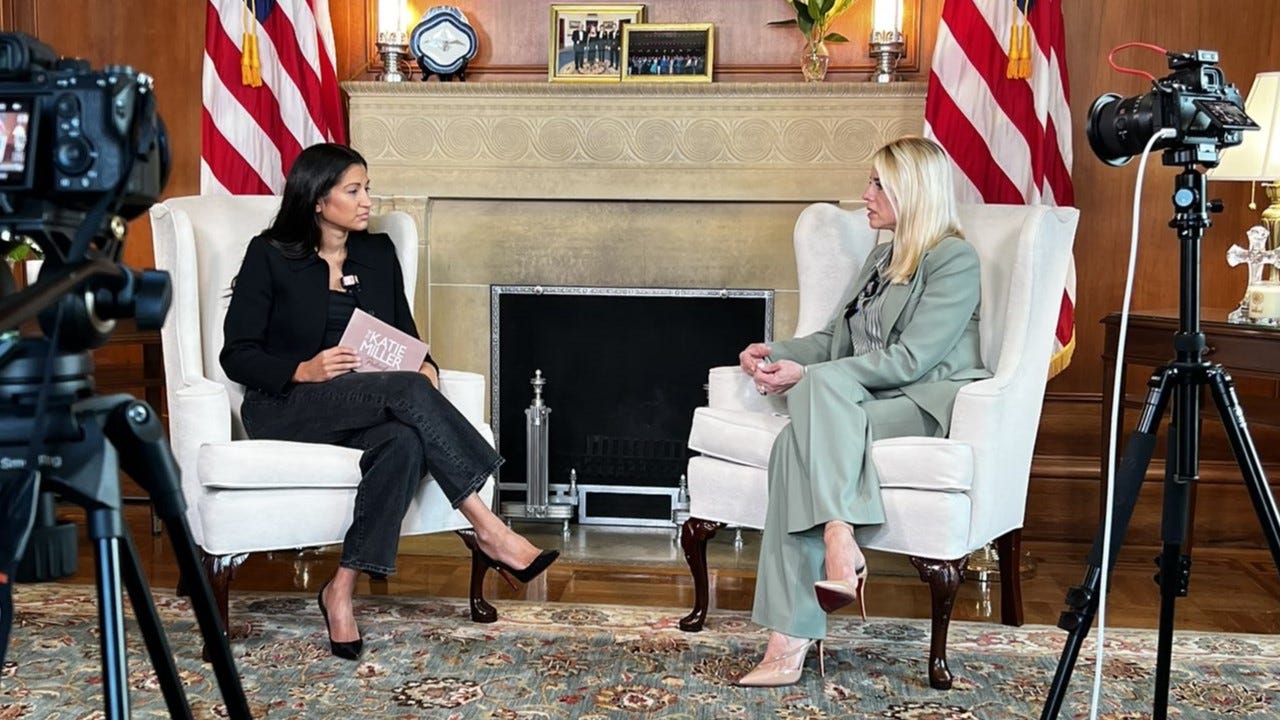
When US Attorney General Pam Bondi declared in a recent podcast, “There’s free speech and then there’s hate speech,” many on the right recoiled. Understandably so. The phrase “hate speech” has long been a loaded rhetorical trap—used by the left to conflate dissent with bigotry, and feared by the right as a prelude to censorship. Leftist legislators often invoke “hate speech” to dress up performative outrage as legal principle.
As Charlie Kirk put it: “Hate speech does not exist legally in America. There's ugly speech. There's gross speech. There's evil speech. And ALL of it is protected by the First Amendment.”

He’s right—legally. But culturally, “hate speech” is everywhere. And that’s the problem. The term lives in headlines, hearings, and HR manuals. It shapes institutional response, even if it doesn’t shape legal doctrine. Which means ignoring it isn’t a defense. It’s a forfeiture.
The right has long taken comfort in the fact that “hate speech” appears nowhere in our laws. But even when uttered by the nation's top lawyer, the phrase still gains no legal weight. Leaving “hate speech” legally undefined has its own risks. It becomes a floating signifier, inviting semantic drift, moral panic, and institutional overreach. If the right continues to reject the term outright, it forfeits the chance to inoculate public discourse against its misuse. The smarter move is to reframe it—narrowly, precicesly, grounded in Brandenburg. By defining “hate speech” as a diagnostic category rather than a censorship tool, the right can defend the First Amendment while reclaiming rhetorical ground from the left’s expanding playbook.
The Semantic Battleground
The right’s working definition of “hate speech” is simple: it doesn’t exist. The left’s definition is much slipperier. Ostensibly the left defines “hate speech” as bigoted slurs. At the same time, they claim previously acceptable words as new slurs or argue that disagreeing with someone who possesses certain traits amounts to bigotry.
To the extent that both sides ever agree on what “hate speech” is, they agree on the left’s up-front definition and disagree only on whether it should be allowed. This has always been a bad look for the right. It allows the left to caricature free speech absolutism as little more than a defense of racial slurs: “They just want to use the N-word.”
Worse, when conservatives occasionally concede the left’s definition—acknowledging certain speech as “hate speech” but insisting it should remain legal—they forfeit the foundation of their own argument.
Politically, this ambiguity puts the right in a bind. Either defend speech that is genuinely vile, or appear soft on harassment. Either way, the rhetorical terrain tilts leftward. Institutions, media outlets, and campus administrators default to the left’s definition, while conservatives scramble to clarify what they’re not defending. The result is a credibility gap—one that alienates persuadable audiences and weakens the right’s standing in public discourse.
To close that gap, the right must stop rejecting the term and start defining it. Not to criminalize speech, but to capture the term and rewrite the rules of engagement.
Capturing the Flag
You may have played Capture the Flag on the playground, but its origins are ancient and brutal. In ancient Rome, a captured standard meant more than battlefield victory—it signaled symbolic dominance. To lose a standard was a profound disgrace. In medieval warfare, banners weren’t just decorative; they were strategic rally points. To seize the enemy’s flag was to fracture their formation, throw them into chaos, and all but assure their defeat.
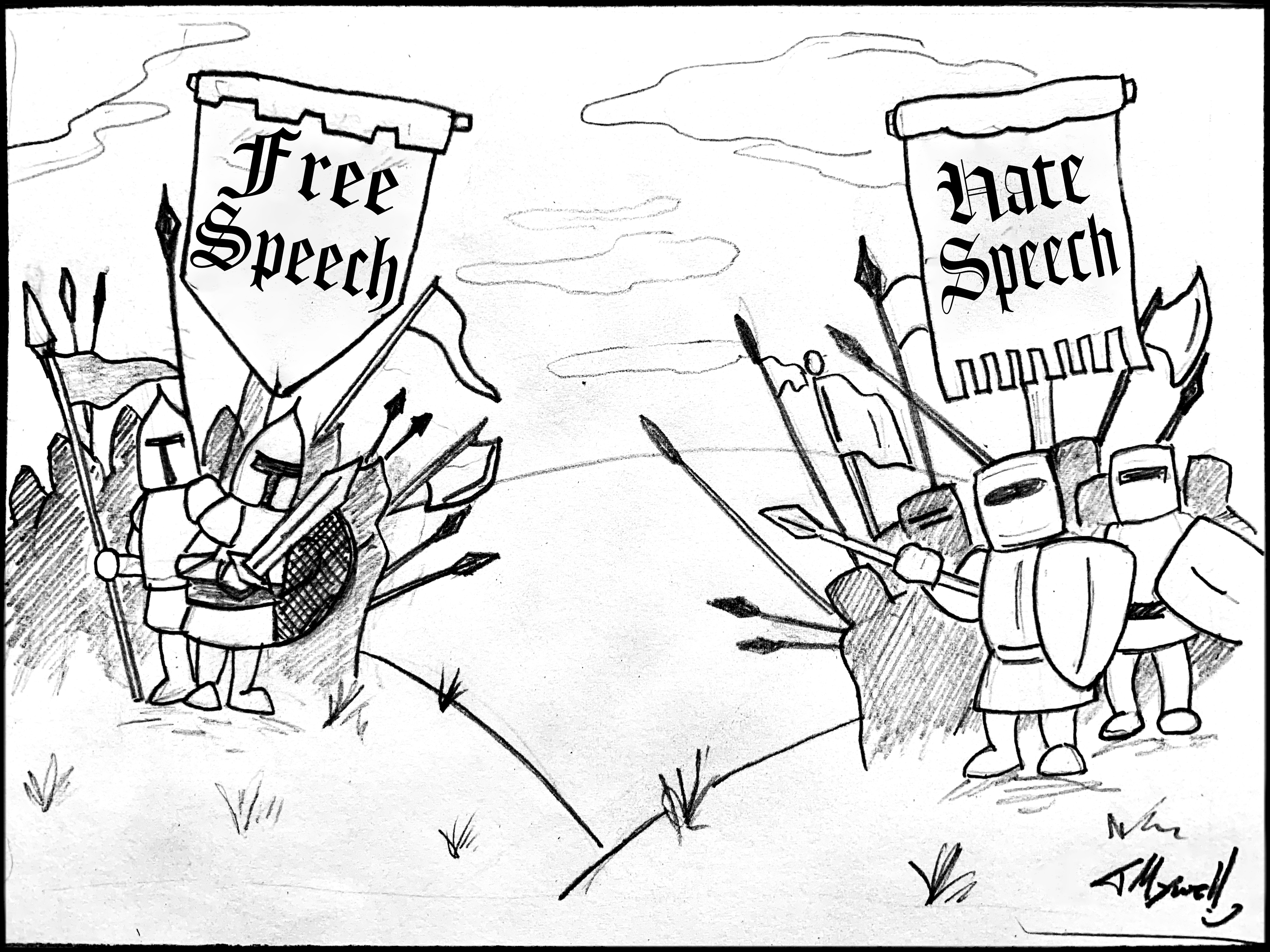
Modern politics is no different. The left has long understood the power of linguistic capture. Terms like racism, fascist, democracy, and even woman have been redefined, repurposed, and redeployed to serve ideological ends.
Each word, once neutral or contested, now flies under a partisan banner. The right, meanwhile, has spent decades playing defense—arguing over definitions it didn’t write, reacting to accusations it didn’t frame, and losing ground in a war it didn’t name. “Hate speech” is the next banner at stake. Undefined in law but omnipresent in discourse, it floats like a standard waiting to be seized. The opportunity is clear: capture the term and define it narrowly as a diagnostic for speech that precipitates real-world harm.
Stochastic Terrorism and the Limits of Brandenburg
Brandenburg v. Ohio gives us the diagnostic: the First Amendment does not protect speech that incites imminent lawless action or constitutes a true threat. But it does protect speech that is offensive, provocative, or hateful—so long as it doesn’t cross that threshold. As such, the concept of “hate speech” is neither protected nor prohibited by the Constitution. Speech is not illegal simply for being hateful. But neither can illegal speech—incitement, true threats, harassment, or defamation—hide behind First Amendment protections. The term “hate speech” may carry political weight. Legally, it carries none. And that’s the point.
If Brandenburg defines the threshold, stochastic terrorism is the penumbra—the ambient zone of rhetorical influence that doesn’t trigger prosecution, but does precipitate violence. The term first entered mainstream vocabulary via Rolling Stone, in a critique of then-candidate Trump’s offhand remark that “Second Amendment people” might prevent Hillary Clinton from picking judges hostile to gun rights. At the time, it felt like the left tipping its hand, naming a mechanism already observable in their own toolkit as Trump supporters found themselves under assault with eggs, bottles, fists, and bike locks throughout 2016.
But the opposite happened. The term stuck. It became a favored accusation against Republicans and conservatives any time their rhetoric veered slightly martial. Meanwhile, Democrats continued to call for direct escalation—take to the streets, get in people’s faces, harass officials in public. Out of one side of their mouth, they decried such rhetoric as dangerous. Out of the other, they engaged in it.
This is where the definitional opportunity lies. Stochastic terrorism describes a pattern: public figures using inflammatory language that predictably leads to violence, even if not intentionally or imminently. It’s not incitement. It’s not coordination. But it’s not benign either. It’s the statistical pipeline from radicalization to activation—rhetoric that primes lone actors to act. If Brandenburg is the threshold, this is the margin just beyond it.
This is the legal terrain Bondi may be navigating. Her public statements suggest—though don’t confirm—that she may be preparing a Brandenburg-style case against organizations whose rhetoric appears to recruit and activate violent actors. It’s early, but there is speculation that the Charlie Kirk shooter may have been involved with something similar. The challenge is that many such groups operate in the fuzzy margin just outside Brandenburg’s reach—spreading hate online, radicalizing followers, and cultivating ideological readiness for violence without issuing direct commands. If Bondi is building a case, it will likely target operational coordination and ideological grooming rather than isolated speech acts. If so, the prosecution won’t hinge on the term “hate speech,” but on a demonstrable pipeline from radicalization to activation.
Reclaiming the Territory
The online right’s reaction to Bondi’s use of “hate speech” has been reflexive—a Twitter pile-on that treats the phrase as a surrender to the left, without considering how she used it, what position she occupies, or how the term functions in our cultural vocabulary. One commenter called it “the most destructive phrase that has ever been uttered.” The critique assumes that “hate speech” is a left-coded term, but that assumption misses the strategic opportunity.
“Hate speech” is already a cultural fixture—a term the public recognizes, the media amplifies, and institutions respond to. The danger isn’t in using it. It’s in leaving it undefined. The left has long used the phrase to mean bigoted slurs, then quietly expanded it to include ideological disagreement and rhetorical discomfort. By refusing to engage, the right has allowed the term to drift into whatever the dominant narrative needs it to be.
Kirk was right to name the legal boundary, but now it’s time to define the rhetorical one. On the right, we often dismiss ideas that aren’t phrased in our preferred vocabulary—as if the wrong word signals a wrong mind. That reflex costs us ground.Let’s not treat a slogan as sacred just because a beloved and tragically taken figure once uttered it. Let’s engage with ideas as Kirk would. Let’s talk about what words mean, what they don’t mean, and what they could mean. That’s the spirit of debate. And it’s how we reclaim the terrain.
By introducing a precise, narrow definition that captures the predictive harm of certain rhetoric without criminalizing dissent, the right can capture “hate speech,” not as a censorship mechanism, but as a term of art that fills both the legal and credibility gap.