![The [Dis]Missive](https://substackcdn.com/image/fetch/$s_!Uldg!,w_80,h_80,c_fill,f_webp,q_auto:good,fl_progressive:steep,g_auto/https%3A%2F%2Fsubstack-post-media.s3.amazonaws.com%2Fpublic%2Fimages%2Fbfdb2944-e684-4e82-a976-cbd1f06de81b_288x288.png)
Free Trade, Selective Memory
Reagan warned against tariffs, then used them. Canada’s ad forgot the second half.

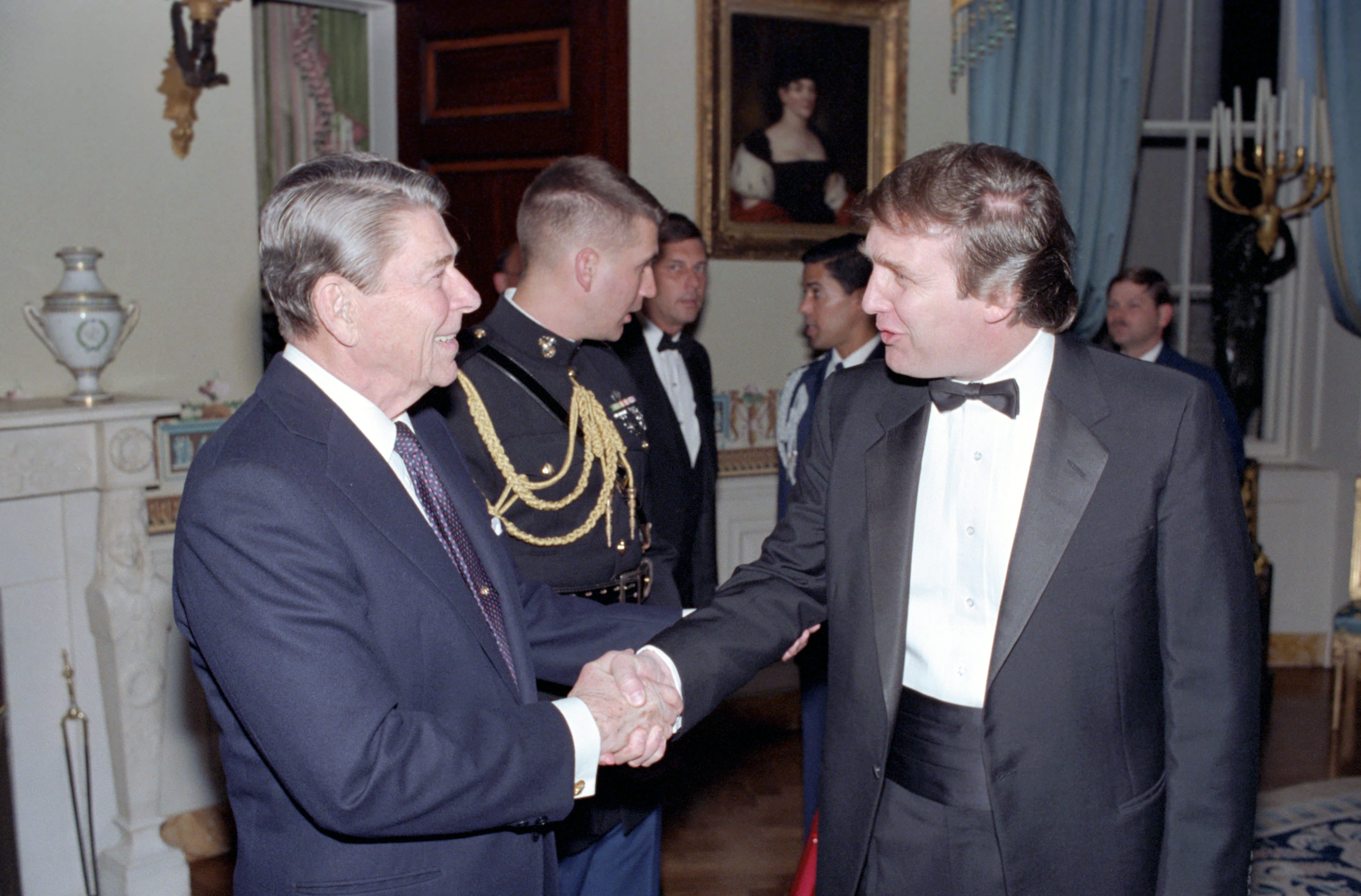
Canada is feeling the heat from new U.S. tariffs on steel and aluminum. Their response? An ad dusting off one of Ronald Reagan’s weekly radio addresses from 1987. The ad paints Reagan as the patron saint of free trade and, by implication, rebukes Trump’s trade policy as a betrayal of conservative legacy.
But Reagan’s legacy isn’t as clean as the ad suggests. Sure, he talked a good free-trade game, but his record is a mixed bag. In fact, it’s an irony that the ad pulled a clip from a speech where Reagan was actually announcing tariffs. Tariffs that worked, by the way. Japan had violated a trade agreement, and Reagan responded with duties that stabilized global markets, even if it didn’t deliver immediate gains at home.
I’m not here to defend Trump’s current policy. Ultimately, we have to wait and see what comes of it. But Canada’s ad has nothing to do with history or principle. It’s a misleading nostalgia play, trying to drive a wedge between Trump and conservatives by invoking the fabled image of a Reagan who never existed.
Reagan’s Speech: Half the Story
First, let’s iron out the rhetoric. The Ontario government’s ad zeroes in on one part of Reagan’s 1987 speech, the bit where he warns that trade barriers are economically dangerous. He made his point using language that would have been familiar to anyone alive at the time. He never used the term, but the logic of mutually assured destruction was unmistakable. Retaliation, escalation, and then—boom! Cold War logic applied to trade.
But the ad leaves out what came next: Reagan’s case for using import duties anyway, risks and all. His main justification was that when foreign governments break a deal, presidents don’t have many tools to enforce the agreement. For the benefits of free trade to manifest, he argued, they have to be built on reciprocity.
Trump called the ad “fake,” his go-to term for anything misleading, and he wasn’t wrong. The closing line of the ad, “America’s jobs and growth are at stake,” didn’t follow his trade war warning. Instead it came after he alluded to trade legislation Congress was then considering which would have tied the president’s hands in trade disputes, including taking away the option to use tariffs selectively.
The Real Trade Record
Now that we’ve cleared up what the ad gets wrong about the speech, let’s talk about how it misrepresents Reagan’s trade policy in general. He’s remembered as a free-trade champion, but the record tells a different story. Critics at the time saw plenty of daylight between his rhetoric and his actions. Reagan talked glowingly about free markets, but he reached for tariffs when it suited him. Throughout his presidency, he signed off on a string of protectionist measures. Here’s a selective fly-by:
1981: Imposed voluntary export restraints on Japanese car imports to shield U.S. automakers during a recession.
1982: Enacted quotas and tariffs on European steel to protect domestic producers from subsidized competition.
1983: Levied a 45% tariff on Japanese motorcycles—targeting medium-sized engines—to support Harley-Davidson.
1984: Threatened tariffs on Taiwan and South Korea over semiconductor dumping and market access violations.
1985: Ordered tariffs on pasta imports from Europe in retaliation for citrus restrictions—dubbed the “Spaghetti War.”
1986: Threatened a 200% tariff on Spanish goods in response to restrictions on U.S. grain exports.
1987: Imposed 100% tariffs on Japanese electronics after Japan violated a semiconductor trade agreement.
Not exactly a free-trade purist, right? Even Reagan’s own budget director, David Stockman, couldn’t square the circle: “The essence of the Reagan Administration’s trade policy became clear: Espouse free trade, but find an excuse on every occasion to embrace the opposite.”
Echoes of the Gipper
So what’s the real difference between Trump and Reagan on tariffs? Mostly, it’s rhetorical.
No one claims Trump is as articulate as Reagan. He doesn’t bother with grandiloquence. When he posts on Truth “Ronald Reagan LOVED tariffs,” he’s citing the record, not quoting a speech. Reagan may have sold pundits on his love of free trade, but Trump followed the action. The Gipper used tariffs, and often.

Trump treats tariffs as bargaining chips. He downplays the risk. He leaves ideology out of it. While his delivery is louder and less polished, his targets—subsidization, transshipment, industrial overcapacity—mirror Reagan’s fairness concerns almost point for point. The logic is the same: trade must be reciprocal, either through equal access or equal restrictions.
Critics call Trump reckless. But Reagan had his own critics. Sure, Trump’s trade measures have caused economic stress, but the worst-case scenarios—recession, stagflation, GDP collapse, runaway inflation—haven’t materialized. Critics are quick to add “yet,” but the forecasts keep slipping. Liberation Day tariffs were supposed to trigger a recession within months. Now the doomsayers say it won’t hit until next year.
The other point critics argue is that Reagan applied trade measures surgically while Trump wields them broadly. Fair enough. But if Reagan’s limited, targeted measures still sparked controversy and economic tension, then even a slowly stabilizing economy under Trump’s much wider trade policy actually validates the approach.
Trump may have overpromised on his trade agenda, but they’ve delivered enough tangible revenue to fund the WIC program during a government shutdown. That doesn’t make tariffs a cure-all. But it does complicate the narrative that they’re purely symbolic or economically destructive.
Nostalgia Doesn’t Win Trade Wars
What can we learn from Ontario’s Reagan ad? It wasn’t a policy argument—it was a nostalgia play. The ad invoked Reagan’s persona, not his record. It framed him as the embodiment of trade principle, rather than presenting an actual principle. By casting Trump’s protectionist stance as a moral failure instead of a strategic maneuver, it tried to shame the policy without engaging it.
But Trump didn’t flinch. He responded with policy—threatening an additional 10% tariff on Canadian imports—and the strategy collapsed. Ontario Premier Doug Ford agreed to pull the ad, citing the need to resume trade talks. It had aired during the World Series, reaching a massive U.S. audience, but it took just one tariff threat to end the campaign. The message was clear: rhetorical nostalgia may win airtime, but it doesn’t win negotiations.
It also reaffirmed Trump’s negotiating savvy. He exercised the option to walk, and Canada blinked. Ford claimed the ad had “achieved its purpose,” but it’s hard to believe that purpose was derailing trade talks. Ford has backed down from escalation before, including threats on U.S. electricity imports that proved unsustainable.
In the end, the ad meant to challenge Trump’s trade logic only confirmed it. It’s leverage, not nostalgia, that shapes the conversation.
So what does that tell us about how we evaluate presidential trade policy—by the rhetoric we remember, or the results we got? And if nostalgia can’t negotiate, what other political myths are we trading on when the actual record says something different? Once the theatrics fade and talks resume, who holds the stronger hand: the country that released the ad, or the one that got them to pull it?