![The [Dis]Missive](https://substackcdn.com/image/fetch/$s_!Uldg!,w_80,h_80,c_fill,f_webp,q_auto:good,fl_progressive:steep,g_auto/https%3A%2F%2Fsubstack-post-media.s3.amazonaws.com%2Fpublic%2Fimages%2Fbfdb2944-e684-4e82-a976-cbd1f06de81b_288x288.png)
Just Asking Questions
When every answer is wrong, the accusation is the point.

Today we’re going to look at some rhetorical devices that shape perception: “just asking” questions, accusations, and repetition. Together they create a trap that distracts from reality, keeping debate focused on charges instead of substance.

Before I dive in, a caveat: in American politics, support for Jewish Americans and support for Israel are rarely treated as separate questions. Criticism of Israel often bleeds into accusations of antisemitism at home, while domestic debates about antisemitism are refracted through foreign policy positions. I’m not going to attempt to disentangle those threads. I’m just going to leave that Gordian knot alone as I address all points as the intertwined subjects that they are.
With that out of the way, let’s look at the dustup that’s on my mind: Sloan Rachmuth, an investigative journalist who describes herself as a Zionist and defender of Judeo‑Christian values, accused Buckley Carlson—son of Tucker and aide to Vice President JD Vance—of being “a vile bigot.” Her basis for the accusation came from two linked events: Tucker Carlson’s interview of Nick Fuentes, a provocateur who deals in antisemitic tropes, and Buckley Carlson’s uncle and namesake sharing a Fuentes clip in which he complained that Donald Trump wasn’t putting “America First” by his own isolationist definition.
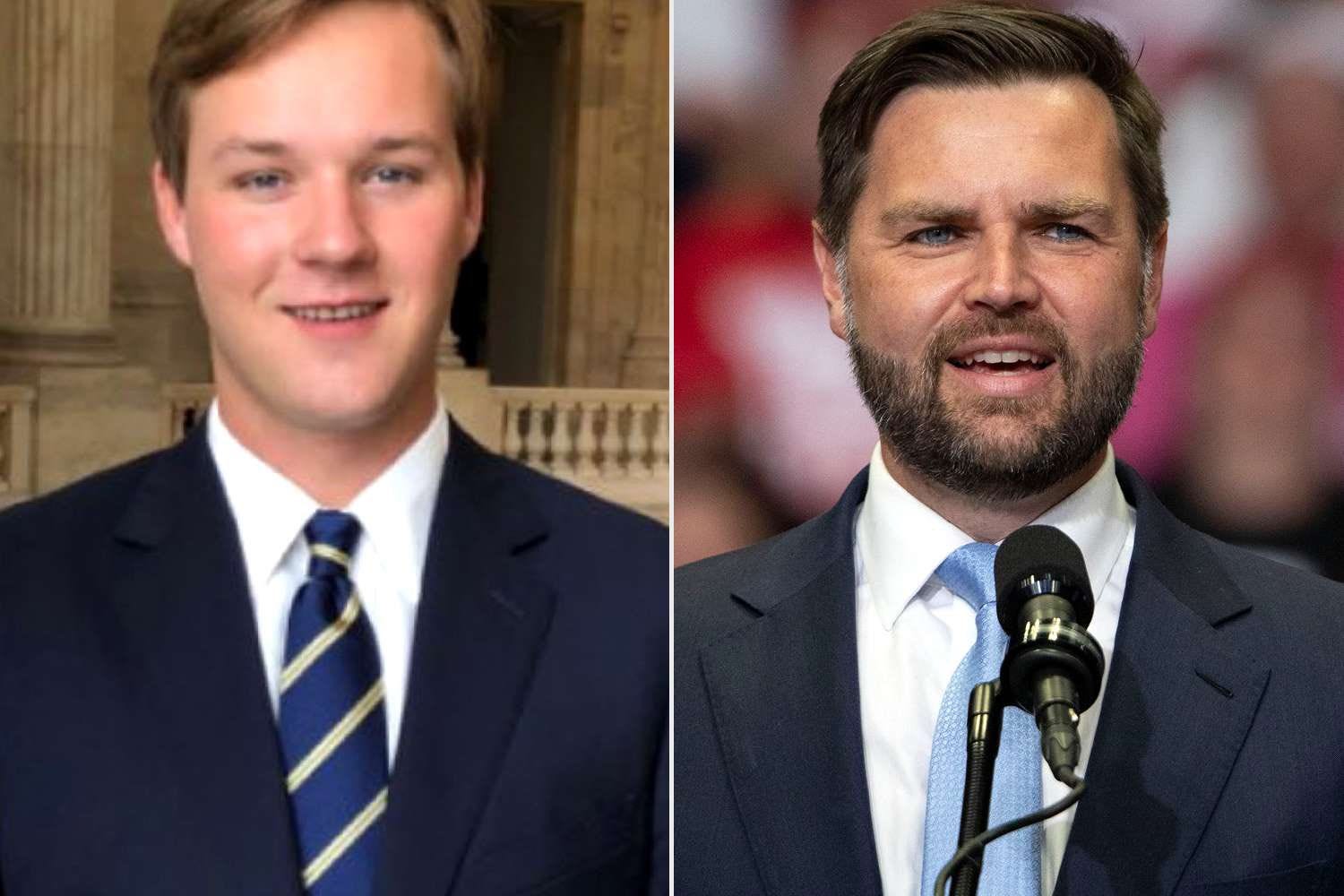
It was blatant guilt‑by‑association. If the father platformed Fuentes, and the uncle retweeted him, then perhaps the younger Buckley—and by extension Vance—was tainted too.
The Vice President fired back, calling Rachmuth’s attacks “a complete lie” and questioning whether slander could ever be considered a Judeo‑Christian value. Rachmuth doubled down, insisting that speaking out against antisemitism meant scrutinizing the people closest to power. With emotions running high, one could be forgiven for missing the irony, but once you see it, it’s hard to unsee.
Fuentes himself advances antisemitic tropes by “just asking questions,” laundering bigotry through feigned inquiry. Rachmuth, in defending her own attack, essentially insisted she was just asking questions about Buckley Carlson. The journalist mirrored the provocateur she accuses the Vice President of sympathizing with. It’s a familiar pattern that reveals less about antisemitism than about accusation as a rhetorical weapon.
The accusation itself is bizarre, but maybe not unexpected in these times. Just a couple of weeks ago, Vance fielded a couple other loaded questions about Israel at a TPUSA event. He sidestepped the religious and ethnic framing and instead asserted that the Trump administration’s measured support of a geopolitical partner was an America First position. For this, he was accused by critics of failing to condemn antisemitism hard enough.
Pattern Recognition
The spat between Rachmuth and Vance is just the latest turn in a familiar cycle. No matter what the Trump administration does to demonstrate pro‑Israel and pro‑Jewish intent, the accusations come. It’s a constant barrage that aims to recast positive action as ill‑intended.
When Vice President JD Vance visited Germany in February, he laid a wreath at Dachau and spoke of the “unspeakable evil” of the Holocaust. The next day, he spoke in Munich where he criticized restrictions on speech and the suppression of political parties, suggesting that silencing political movements—even unsavory ones—risked echoing the same authoritarian reflexes that Europe’s history warns against. Even so, German leaders accused him of misunderstanding what he had just seen.
That spring, when the administration cracked down on several U.S. universities—including Columbia, Tufts, and Harvard—for their soft responses to antisemitism on campus, freezing billions in funding and deporting activists, the administration earned another rebuke. Over 550 rabbis and cantors signed a letter accusing Trump of “abusing the issue of antisemitism” to divide Americans.
In May, NPR ran a feature claiming “multiple Trump White House officials have ties to antisemitic extremists.” The report scrounged social media and poured over event footage, finding connections that ranged from the incidental to the tenuous to stitch together a narrative that antisemitism lurked in the administration. They managed to find a disjointed series of instances where Trump officials had interacted with or been in the vicinity of figures accused of being racists and Nazi sympathizers by activist groups and other third parties.
In June, Trump condemned a horrific attack on a pro‑Israel rally in Colorado, calling it “terrorism” and offering sympathy to the victims. Critics, however, spun solidarity into indifference, focusing on the fact that he did not explicitly mention Jews in his statement.
By July, the administration’s new executive order on antisemitism was itself reframed as sinister. The White House touted “forceful and unprecedented steps” to marshal federal resources against antisemitism, but opponents called it “dangerous,” claiming it was really about targeting immigrants and pro‑Palestinian students.
Some accusations have been downright silly, like trying to make something of Trump’s own son-in-law Jared Kushner, who is Jewish, refusing to specifically say that Trump “isn’t antisemitic” in a book interview.
The trap couldn’t be more obvious: accused of being antisemitic when he doesn’t condemn hard enough, accused of weaponizing antisemitism when he does.
The Pattern is the Point
If you’re left trying to figure out which party is more supportive of Jewish Americans, the polling is instructive. Republicans are significantly more likely than Democrats or Independents to say that prejudice against Jewish people is a problem. Meanwhile, recent Brookings data shows that while unfavorable views of Israel have risen across the board, Democrat support for Israel has cratered, with more than 7 out of 10 young Democrats expressing negative views.

This creates a curious dynamic. Critics who claim to oppose antisemitism while working to politically damage the administration most aligned with Jewish interests internationally may be entirely sincere, but friendly fire is also sincere. The question is less about hidden motives than about predictable consequences. Whatever the intent, the net effect is clear: driving down support for Trump drives down support for Israel. That’s not to accuse everyone calling the Trump administration antisemitic of secretly opposing Israel, but the question stands: who else in American or world politics is so consistently aligned with Jerusalem?
Yet the accusations persist, creating an impossible standard. The administration is accused of antisemitism when it doesn’t condemn hard enough, and accused of weaponizing antisemitism when it does. It’s a perfect trap, which tells you something important: satisfying the critics was never the goal.
The Real Wedge
Why are opponents of the Trump administration so eager to frame every move as antisemitic? It’s not, as some would have you believe, a Zionist or neocon conspiracy to drag America into war on Israel’s behalf. When it isn’t just intellectual laziness, it’s simple wedge politics—an attempt to split off Jewish voters and pro-Israel moderates by making support for Trump seem morally untenable.
The administration’s posture lands squarely in the middle: a centrist position that neither embraces nor ignores antisemitism, but insists on addressing it through policy substance rather than performative gestures. Trump’s own response to the Tucker-Fuentes controversy captured this perfectly: “You can’t tell (Carlson) who to interview... Ultimately the people have to decide.”
Can the administration actually do anything to stop the accusations? The short answer is no. Nothing will satisfy the extremes. The isolationist antisemite will see any cooperation with Israel or association with Jewish figures as catering to “Jewish interests.” The paranoid anti‑fascist will see Nazis under every rock and behind every tree. Both need Trump to be the villain their worldview requires. When Rachmuth borrowed Fuentes’s playbook to attack the Vice President, she revealed the game: the accusations aren’t about antisemitism at all, but about reloading the trap with more accusations disguised as questions and designed to keep the administration permanently on defense.
What do you see? Is antisemitism being addressed, or weaponized? Do you see the same trap at work in other debates—where no answer is ever enough? Leave a comment below.
The irony of Rachmuth using the same tactic as Fuentes is striking. Your point about the imposible standard rings true, when any response becomes proof of guilt, the accusation itself is the weapon. The polling data on Republican concern about antisemitsm versus Democrat views on Israel adds an intresting layer. This rhetorical trap seems designd to keep the debate perpetually on defense rather than substance.